Setúbal is an historic fishing port that lies at the mouth of the River Sado and opposite the Troia Peninsula about 48km/30 miles south of Lisbon. It is an easy day trip from Lisbon or ideal to spend a few days exploring. Setúbal was very important in the production of sea salt and for the Portuguese fishing industry, particularly sardines, in the 19th and early 20th Centuries. Setúbal covers a wide area and is relatively flat – unlike Lisbon and Porto. We walked a lot of steps each day we were there!
Magnificent 7 // Setúbal, Portugal
- Marvel at the River Sado dolphins
- Clock in to the Museu do Trabalho
- Stroll down Avenida Luisa Todī
- Relax in Casa da Baia
- Explore the Mercado do Livramento
- Visit Praia de Troia
- Sample the regional food and drink
Getting there –
We chose to go by train from Lisbon to Setúbal. Trains leave on the only privately owned railway line in Portugal from the Roma Areeiro train station. Both Roma and Areeiro are metro stops on the Green Line of the Lisbon Metro. Of these two stations, Roma is closer to the Roma Areeiro train station. Alternatively, you can catch the train from Sete-Rios train station which is next to the Jardim Zoologico metro station on the Blue Line of the Metro. The Roma Areeiro train station had an unloved and slightly run-down feeling. Toilets were closed and it is not somewhere to spend a lot of time. However the train arrived on time, was a new looking double decker and ran smoothly and efficiently to Setúbal
Where we stayed –
We stayed at the Solaris Hotel situated in a small square (Praça Marques Pombal) just off Avenida Luisa Todi. Location was good, only a short walk down to the port area where we spent most of our time. The staff were friendly, the breakfast was fine (not a lot of cooked options, but that’s OK for us) and the room was a reasonable size. There was plenty of hot water with good water pressure in the shower and the air-conditioning worked well. A bonus was the small fridge. It was a long walk from the railway station to the hotel, and it was very hot on the day we arrived. In hindsight, we should have taken a taxi to the hotel. We took one back!
To eat and drink –
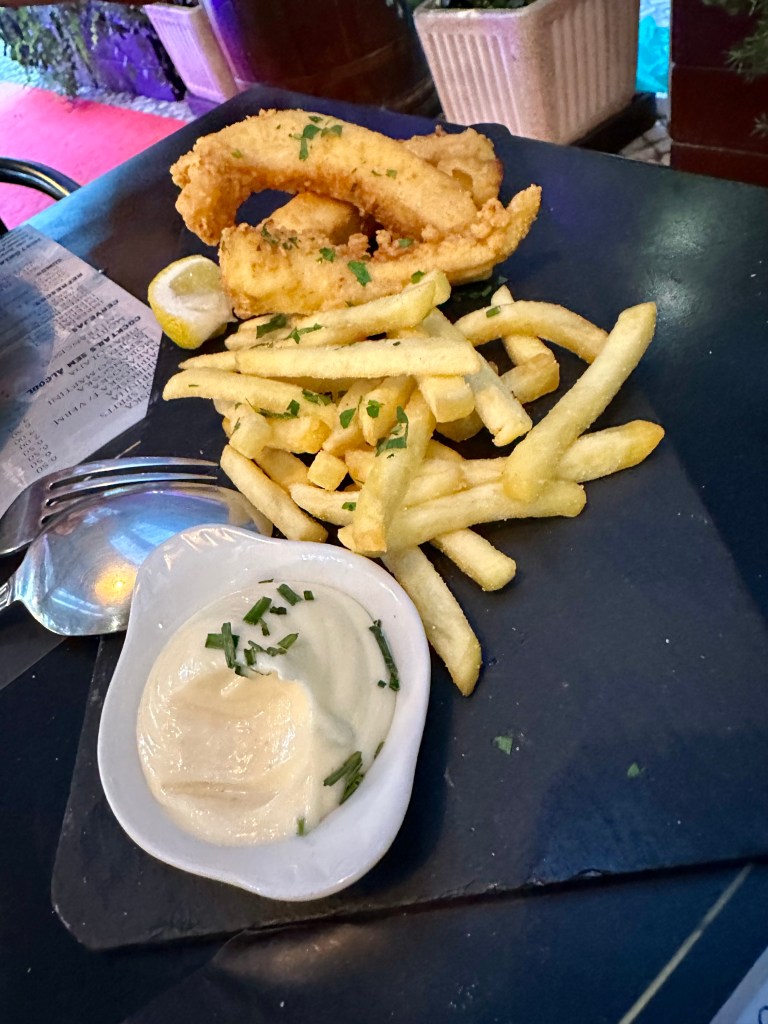
As with most cities and towns in Portugal, great food and drink is easy to find. Setúbal is a large port and fish in all shapes and sizes are available. Choco frito (nothing to do with chocolate) is advertised everywhere and this deep-fried cuttlefish dish is very popular.
Magnificent 7
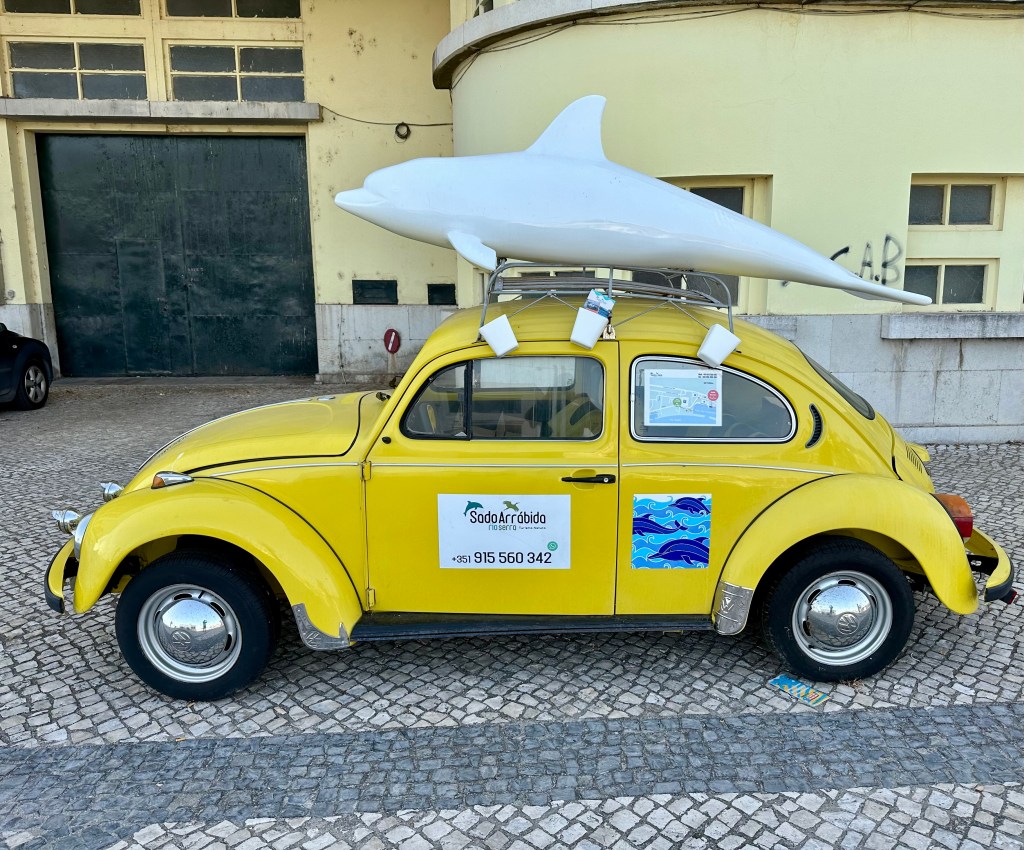
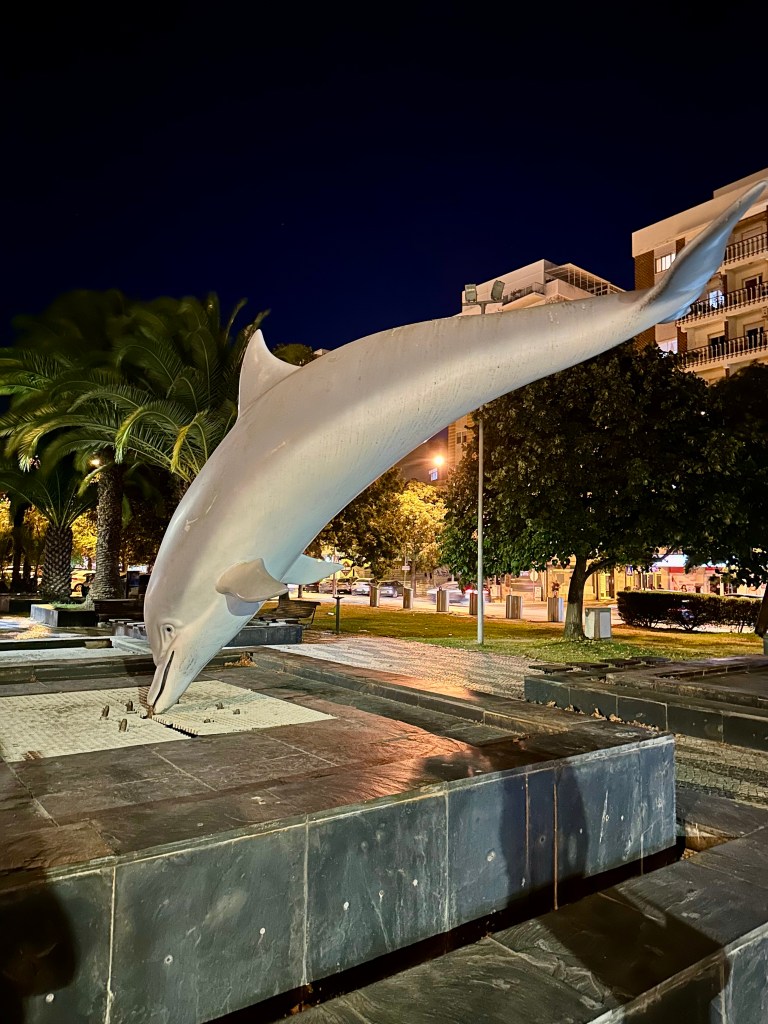
1. Marvel at the River Sado dolphins
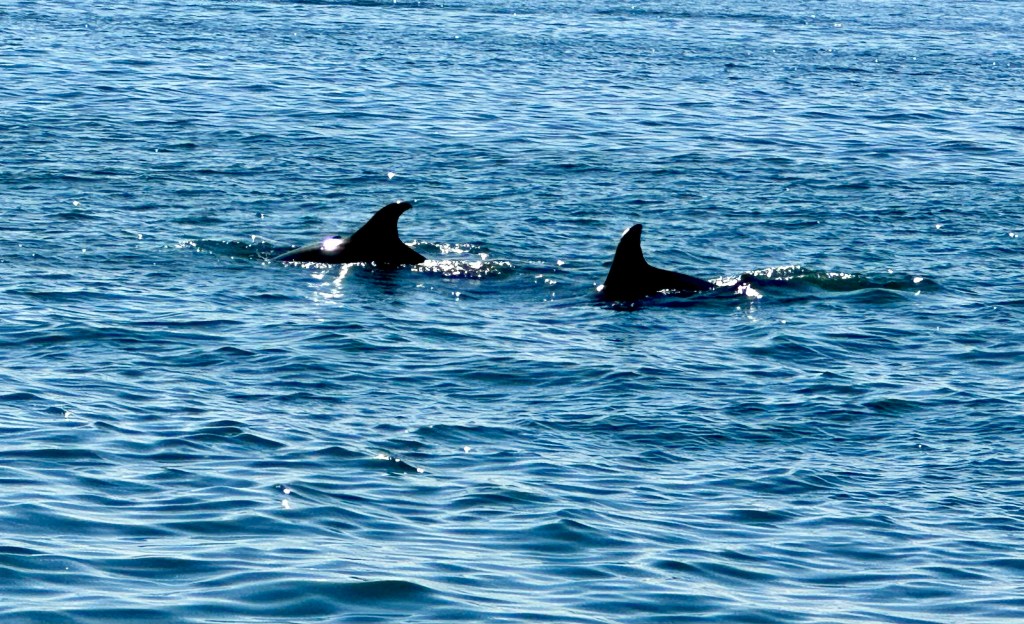
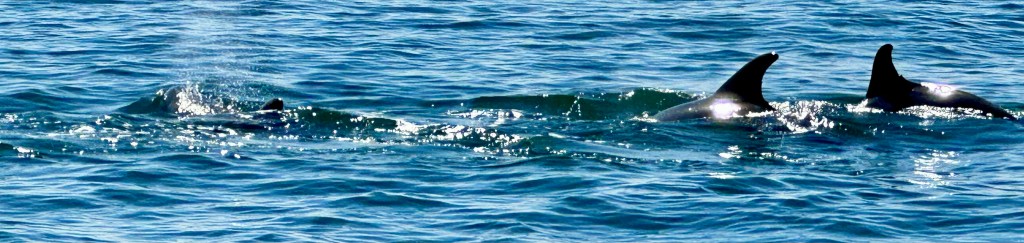
We took a 10 o’clock tour with Rodas do Sal that lasted 2hrs 20 minutes. The guide was good, although the English language translation was much shorter than the Portuguese language information! Nevertheless, the information provided was informative and useful.
There was a relatively short 20 minutes in the dolphin viewing area, but this was plenty to see a number of dolphins. What we liked was the restriction on the number of boats in the area. There were only two other boats viewing at the same time as us.
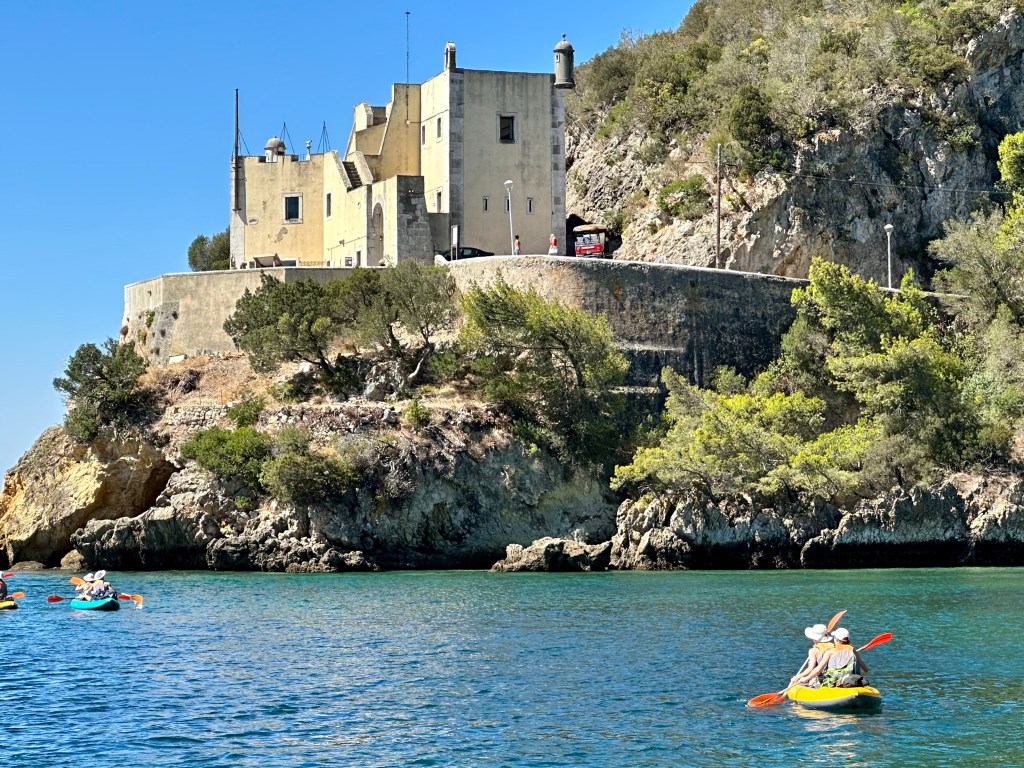
After viewing the dolphins we motored over to see the beaches at Troia and then up the coast to see some award-winning and picturesque beaches such as Praia dos Galapinhos and Praia do Coelho as well as the Parque Natural da Arrábida. Various sites were pointed out, such as Santa Maria Fortress, the Arrábida Convent and the orthopaedic hospital housed in the old Santiago do Outao Fort.
No swimming option was offered on our tour so if that is important, find another tour company as we saw one boat letting passengers have a swim. Please note that there was no toilet on board, so if you can forgo that extra coffee at breakfast, it will make a more comfortable trip. Thoroughly recommended.
2. Clock in to the Museu do Trabalho

Who would have thought that a museum dedicated to the world of work, highlighting the trials and tribulations of the workers in the sardine industry would be interesting? It was fascinating! Housed in an old canning factory with displays of industrial machinery and a traditional early 20th-century shop, it was well presented with information in English as well as Portuguese. It is well worth an hour or so of your time. Entrance is only 1.5 Euros and free for visitors aged 65 or older.
3. Stroll down Avenida Luisa Todī
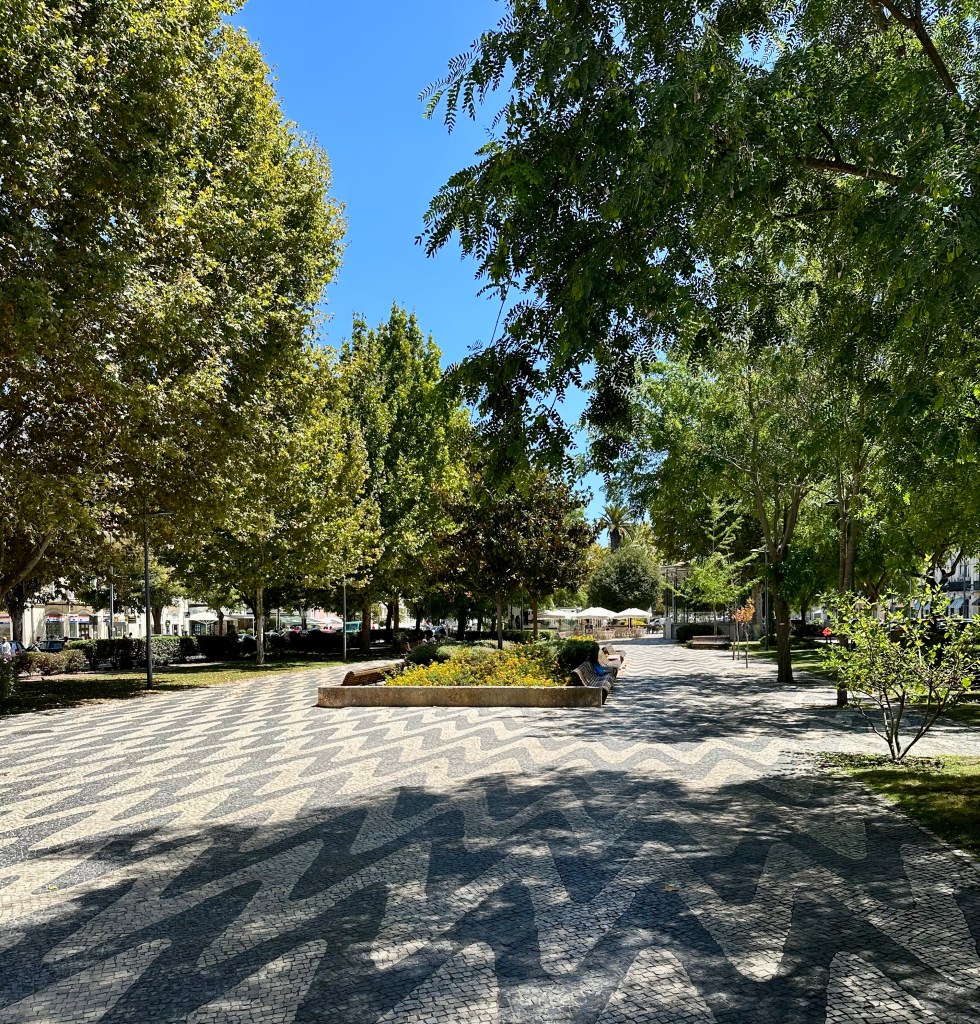
This is Setúbal’s central avenue named after a popular Portuguese opera singer born in Setúbal. There are two lanes of traffic either side of a wide pedestrianised area full of shade, cafes, fountains, and sculptures. It was a pleasure to stroll along and was buzzing in the evenings, particularly at the weekend. This is a great place to sit and people-watch as well as to take a break over coffee. Avenida Luisa Todi is where you can find the municipal market, Casa Baia, a large Pingo Doce supermarket (near the Mercado do Livramento) as well as many restaurants and bars.
4. Relax in Casa da Baia
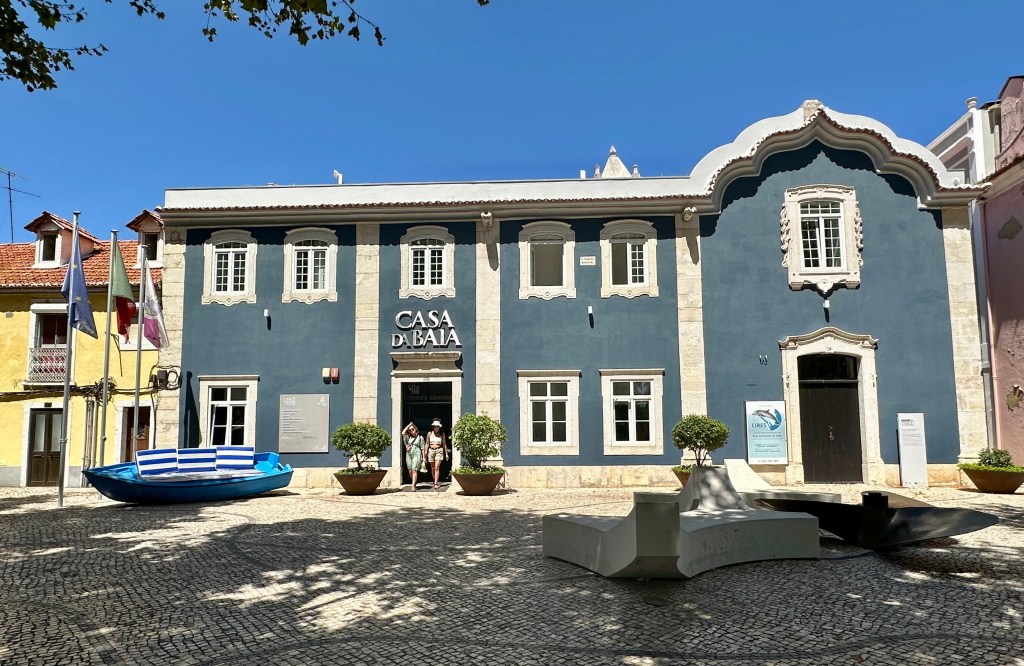
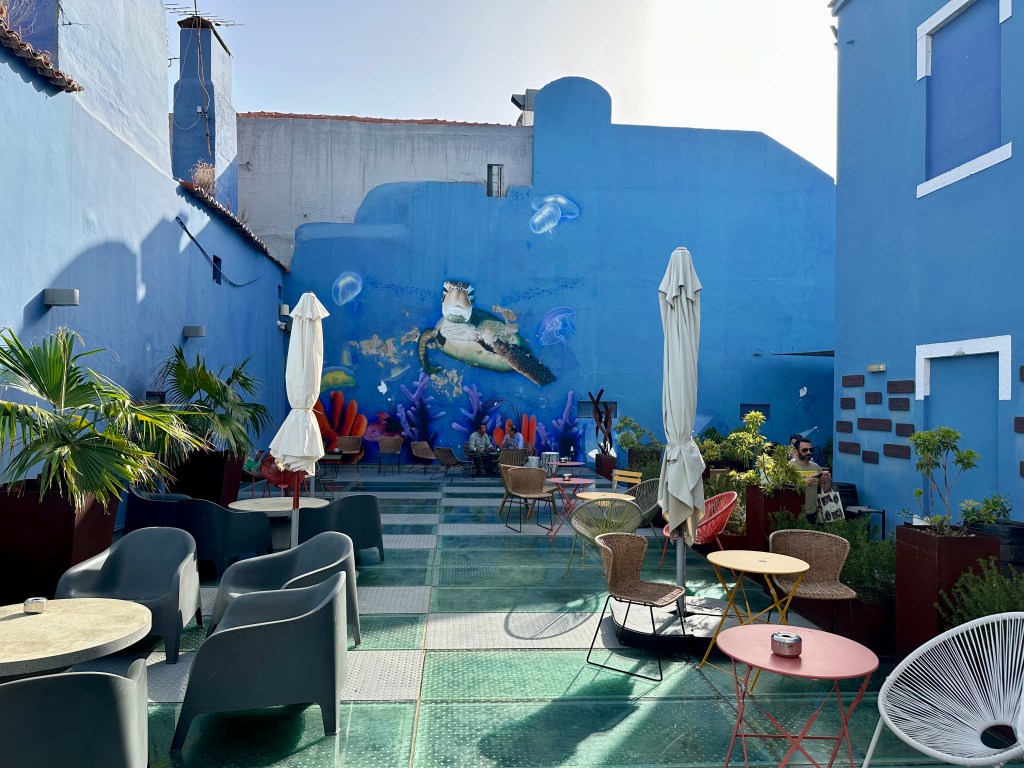
Located in a beautiful blue building on Avenida Luisa Toda this is a combination of Tourist office, art gallery, cafe and traditional produce shop. A great place to stop at and take a break. The cheese tostadas are epic and can be shared by two people. There is a selection of sardines, tuna and mackerel harvested in Setúbal, as well as regional wines, cheeses and sweets. On the walls are paintings from local artists. The outside area at the back is a great space and there are glass panels of a small section of the floor showing archaeological remains.
5. Explore the Mercado do Livramento
This is Setúbal’s main market located on Avenida Luisa Todi. Famous for its fish and seafood, it also has flowers, fruit, olives and other locally grown foodstuffs. It is liveliest in the morning with the fresh fish deliveries. Look out for the tiles around the walls and the statues of traditional vendors.
6. Visit Praia de Troia

The three popular ways of getting to Praia de Troia are by ferry, catamaran or private hire boat. All are available from the Port. The ferry takes you to either the Roman ruins or Praia de Troia and the catamarans/ private hire boats just to the beaches. Praia de Troia is vast with white sand and clear water, but it’s still the Atlantic and still cold, around 17-18 degrees Celsius in summer. The views back over Setúbal and Serra da Arrábida are stunning. There is a casino and an hotel that looks incongruous to the setting and it’s a bit of a walk to where the sunbeds and umbrellas are sited. Most visitors seem to take their own umbrellas, chairs and ice boxes with them. Praia de Troia is in our opinion a bit overrated, as Portugal is blessed with many, many beautiful beaches.
7. Sample the regional food and drink
Wherever we go in Portugal there are local specialities. In Setúbal the Mercado do Livramento and Casa da Baia will tempt you with a fantastic array of local food and drink.
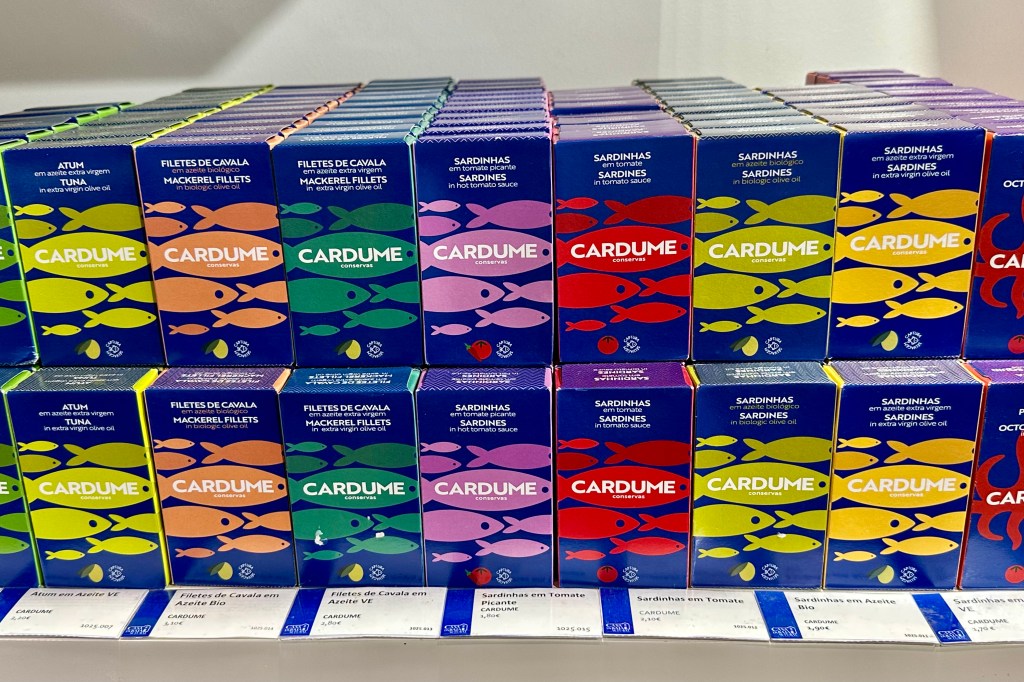
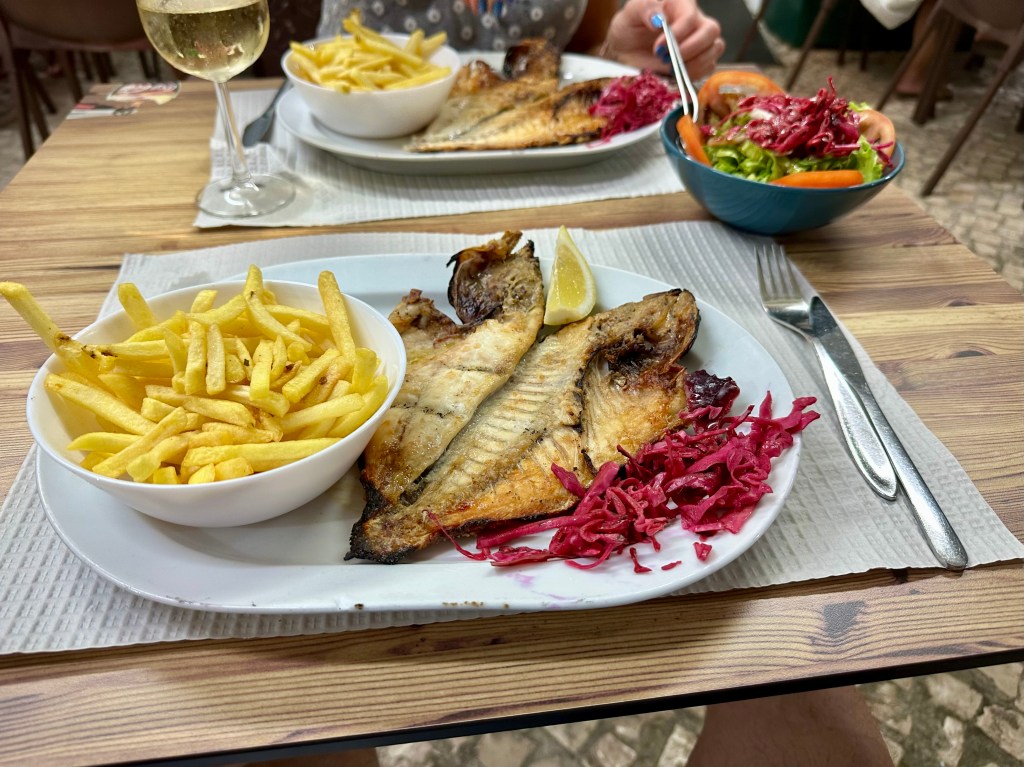
Walking around, it seemed that every restaurant in the Port area had a sign advertising “Choco Frito,” which is deep-fried cuttlefish. If you like the texture of squid, you will love it. It is served with lemon and mayonnaise as well as French fries. To me, it is the perfect starter. Servings are generous, and a main course of Choco Frito is a lot of fried food! Other fish are also popular: grilled sardines, mackerel and dourada were on most menus. We particularly enjoyed our grilled dourada (sea bream) one evening. As mentioned above in the Museu de Trabalho, sardines are big in Setúbal as are Bulhao Pato -clams. One of the speciality wines of the region is Moscatel de Setúbal which is a sweet dessert wine.
Of Note
There are lots of other things to see and do in Setúbal. The Monastery of Jesus, the Fortress of St Filipe and the Igreja de Sao Juliao are all excellent buildings to explore and are accessible by a short taxi ride. Look them up before you go as they may interest you more than Praia de Troia, for example.
Fun Facts
The statues inside the Mercado do Livramento portray some of the tradesmen’s professions. They are by Augusto Cid, who was a comic artist/cartoonist as well as a sculptor.
The football manager José Mário dos Santos Mourinho Félix (shortened to Jose Mourinho) was born in Setúbal in 1963.
 Global Gary