Évora is the capital of Portugal’s Alentejo region, about halfway to the Spanish border from Lisbon (around 130km). Évora has an impressive historic walled city centre and is a UNESCO World Heritage site. Évora has beautiful buildings, remains from Roman occupation and many museums and churches. The walled centre is eminently walkable, although as is common with most cities and towns in Portugal there are a few steep roads to navigate. There is also an important university, the second oldest in Portugal. We visited in late August and it was very hot, high 30s degrees Celsius. Phew!
Magnificent 7 // Évora, Portugal
- Take your bones to the Chapel
- Go to Church
- View the collection of Nativity Scenes
- Join a walking tour with a local
- Search out Roman Évora
- Get lost in the back streets
- Browse the shops in Cinco de Outubro Street
Getting there –
We took the bus from the Sete Rios bus station in Lisbon. You can also get a bus from the Oriente bus station in Lisbon. Travel time was around 90 minutes, slightly less than if we had gone by train. Our fare for two was just over €20 one way. Fares can range from €5-€15 per person each way, depending on the departure time. Both outward and return buses were on time, clean, air-conditioned and very comfortable. Our return bus was a bit cheaper and deposited us at Oriente. The bus station in Évora is just outside the city walls and well situated for hotels.
Where we stayed –
Our hotel was the Évora O Cante Hotel, just down the road from the bus station and about 200 m from the walled city. The hotel has just reopened under new owners after a significant refurb and was very impressive. Our room was comfortable and spacious with a fridge, air conditioning, safe and complimentary water. There was also a swimming pool which was very welcome on a baking hot afternoon. Breakfast was very good, nice fruit, pastries and bread that were replenished regularly. There were also a few hot items stewing away, if that’s your thing.
First impressions –
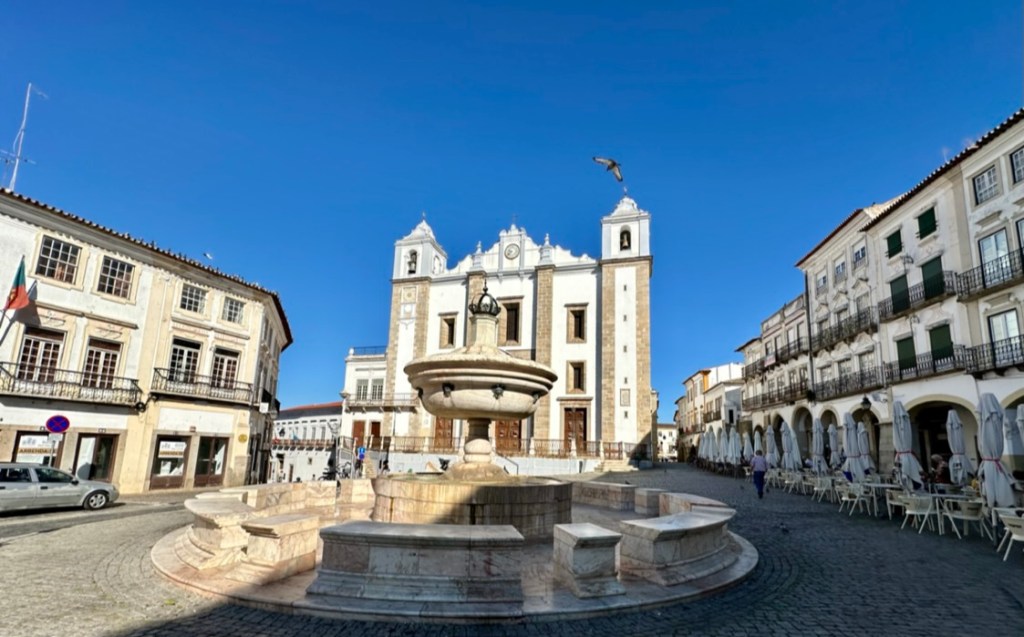
Our hotel room was not ready until 4pm so we left our backpacks at the hotel and went exploring. As we first entered the city our first impressions were of whitewashed houses with yellow trim. There was little traffic as we walked up a steep hill leading to a magnificent square, the Praça do Giraldo, which seemed a perfect place to relax, people watch and view the exquisite 16th-century Gothic architecture. Our first stop was a padaria on the square to have a light lunch and escape the sun. We discovered later that the padaria -Café Arcada- was one of the best-known in Évora and is highly recommended. One of the specialties of the region is Queijadas de Évora, small, sweet cheese tarts.


After lunch we walked around the square and stumbled across the tourist information office. We were able to get a map of the city and the person we spoke to was very enthusiastic and highlighted all of the major sites emphasising those that were free to enter. Then it was time to go back to the hotel as our room would now be ready.
Magnificent 7
1. Take your bones to the Chapel
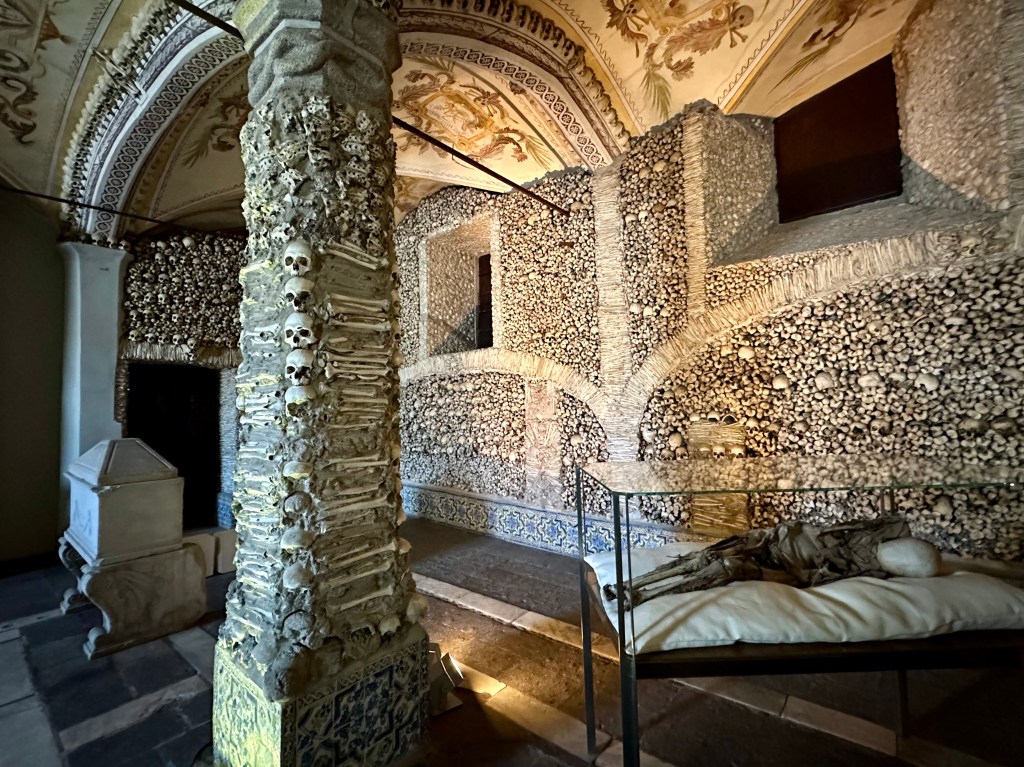
The Chapel of Bones is on the southern side of the walled city centre and is part of the Church of St. Francis. Entrance is to the right of the church’s main door. It makes for a macabre sight, with the skulls and bones of over 5,000 monks on view, all tightly packed together. The bones came from various churchyards in the 1600s and the purpose of the chapel was for people to reflect on the transient nature of material things as everyone is going to die one day.
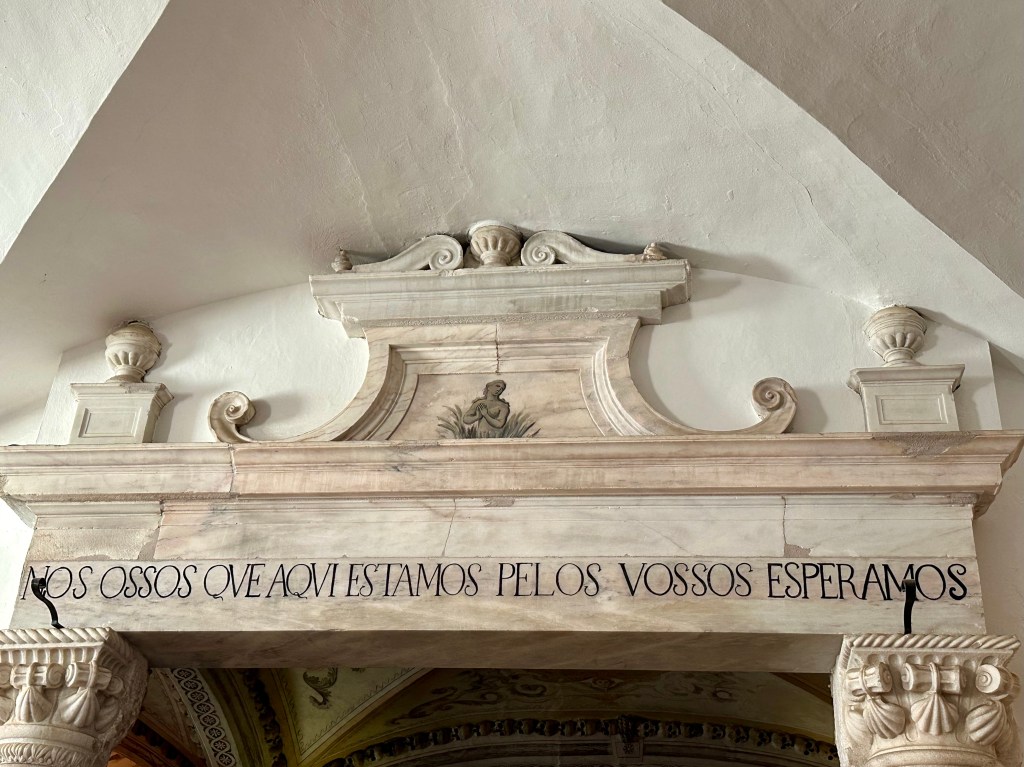
Above the entrance to the chapel is carved a welcome, translated as “We bones in here wait for yours to join us”. Now that’s an invitation you cannot turn down! Joking aside this is a must see in Évora.
2. Go to Church
There is a huge number of places of worship within Évora, most have an entrance fee however some are free to enter. Perhaps the most famous is the Évora Cathedral. As Portugal has only three archbishops and one of them resides here, this is an important religious site. Although not high on our list of things to do when we visit a new city, we did visit the convent and church of São Francisco (St. Francis) as it was next to the Chapel of Bones. Inside it was as you would expect it to be with gold leaf everywhere. There is a baroque chapel to the left of the altar dedicated to St. Francis which is worth visiting.
3. View the collection of Nativity Scenes
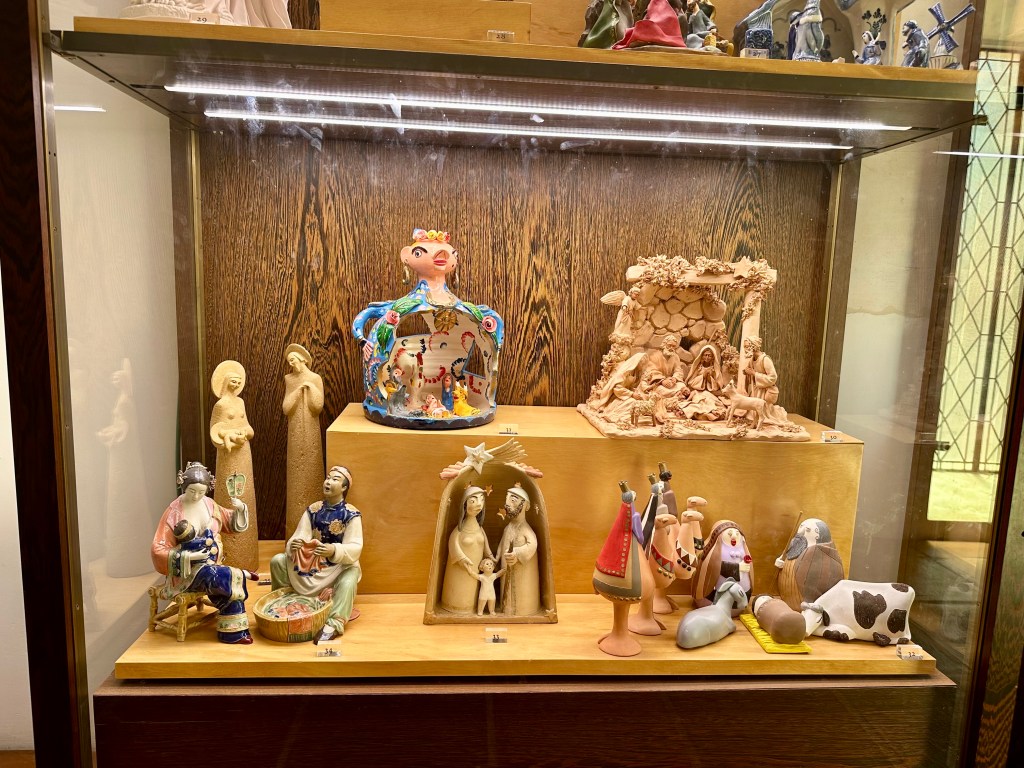
Situated in a side chapel of the São Francisco church with the same entry point as the Chapel of Bones, this collection is truly unique. To reach it you have to go to the top floor and cross a terrace. It is well signposted. There is also a museum of ecclesiastical art on the middle floor before you get to the Nativity scenes, which to be honest, we did not spend very much time looking at. Nativity scenes may not be high on your list of things to view but this is worth seeing. Over two galleries there are hundreds of Nativity scenes in glass cases. Made from different materials, sourced from all over the world by local artisans, each is unique. Near all the display cases is a laminated sheet showing the source and materials used in each scene.
Join a walking tour with a local
We are big advocates of taking a walking tour with a local when we first visit a new town or city. Unfortunately, our walking tour with Take Free Tours was cancelled at the last minute. We had, however, packed the Évora chapter from Rick Steves’ excellent Portugal travel book which included a self-guided walking tour. This was well-written, easy to follow and included interesting information about the major sites in Évora. Not as good as a guided walking tour, but useful.
5. Search out Roman Évora
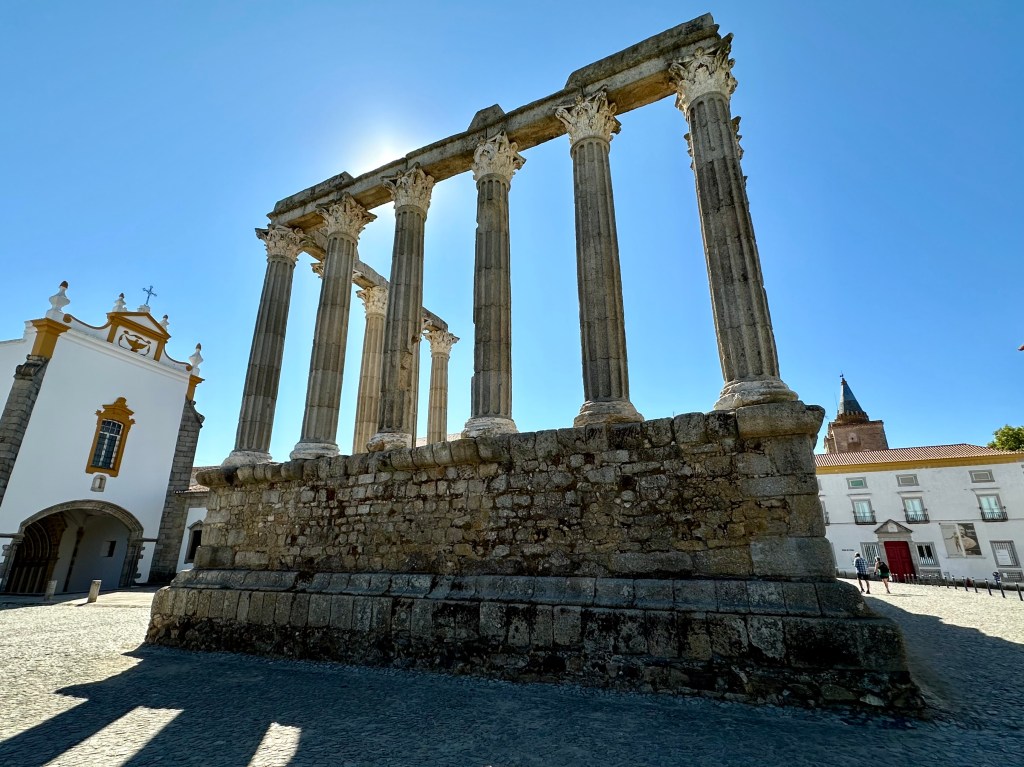
The main attraction is the Templo de Diana, close to the city centre, which was built in the 1st century, during the time of Caesar Augustus. About half of the columns are still standing and from the picture above you can see that it is an impressive sight. Near the temple is a small park that offers welcome shade as well as snacks and drinks. From the edge of the park there is a great view over Évora.
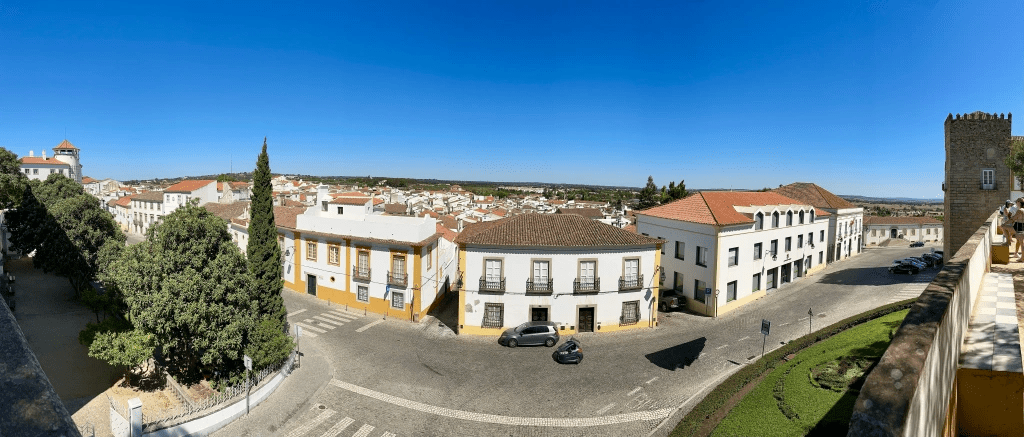
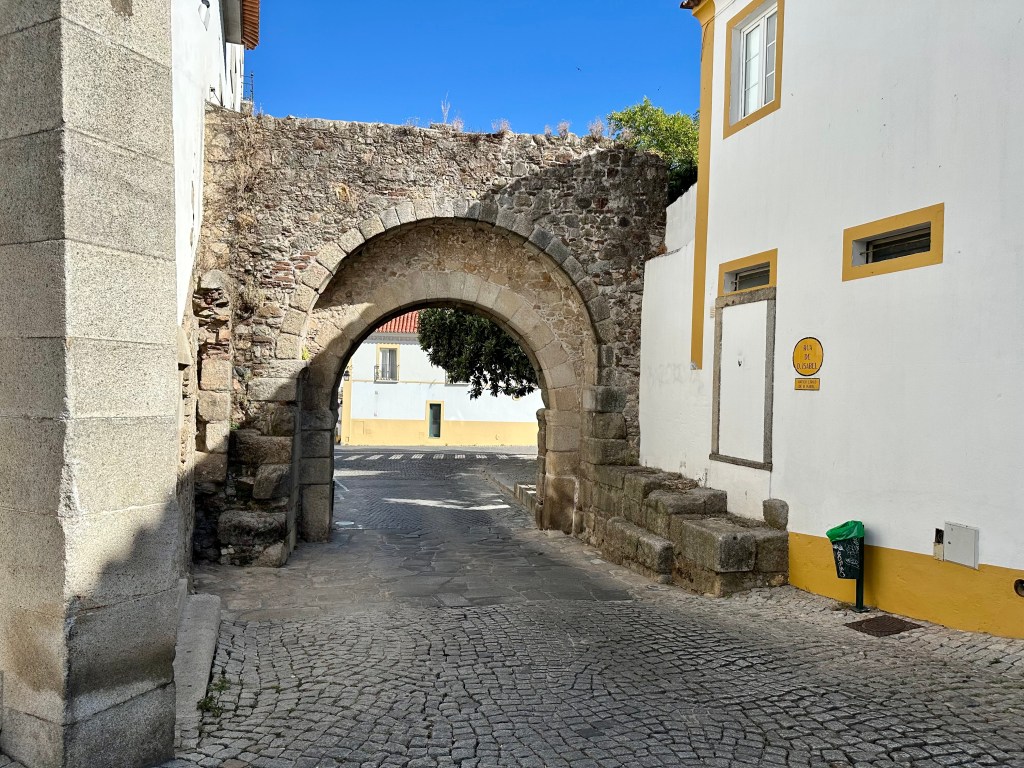
A Roman bath can be viewed in the Town Hall, a short walk away from the Temple. There is a Roman arch, the Porta de Dona Isobel, which was once a main gate in the Roman Wall; this is easy to locate on maps and Google. Similarly, the Casa do Rua dos Burgos has Roman foundations and a collection of Roman artifacts and is free to enter.
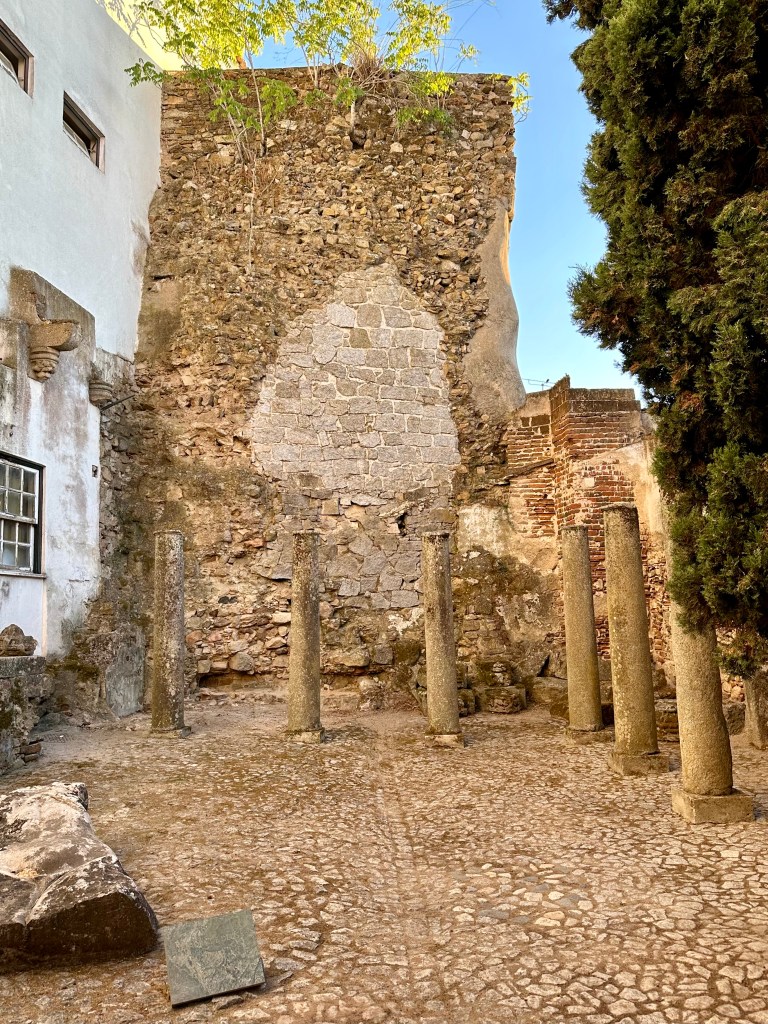
There is a 16th-Century aqueduct in Evora, and it it is very probable that the Romans built one here too. All the above can be viewed for free. There are numerous remains of Roman heritage in the Évora Museum, which has a small charge.
6. Get lost in the back streets
Sometimes it is good to get off the main streets and explore narrow alleyways. There are small shops with a table or two outside that will serve coffee, beer or wine. It may seem that you are lost, however over the roofs of the houses you will be able to see a spire or part of a building that you can use to get you back on a more used path
7. Browse the shops in Cinco de Outubro Street
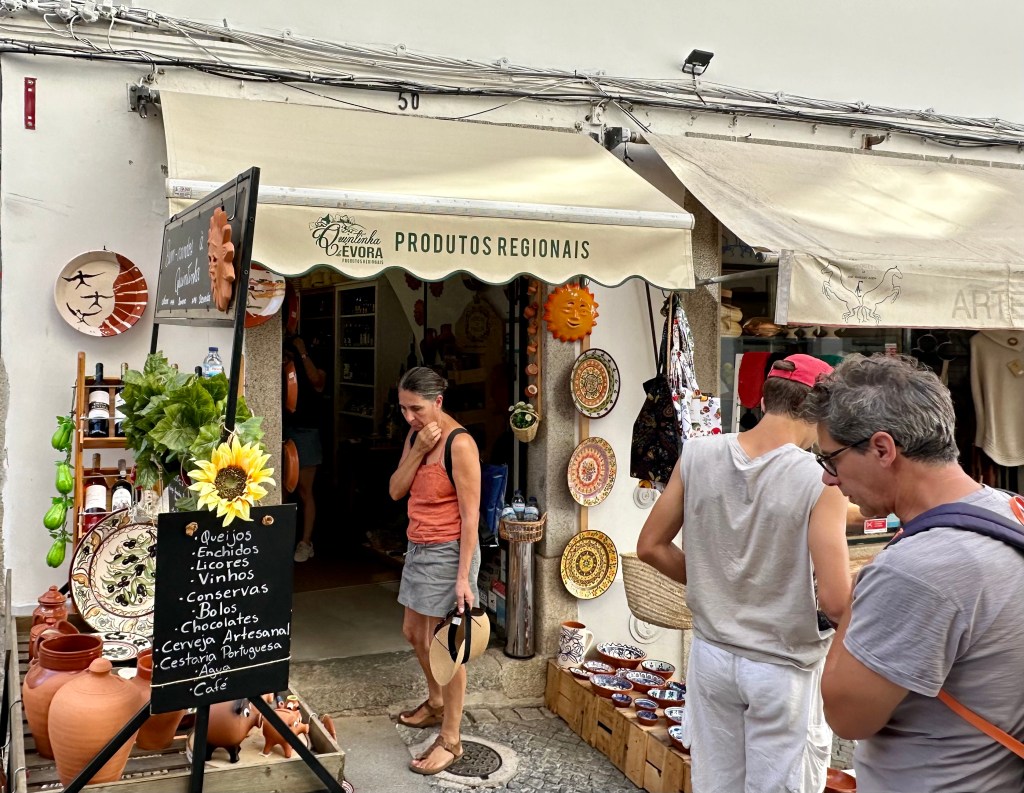

This is tourist central, although it was not that busy when we were there. This street was named after an important date (5th October, 1910) when Portugal transitioned from a monarchy to a republic. Many shops on this street sell items from the Alentejo region. Cork is everywhere, from hats to travel bags to handbags/wallets/purses. We even saw some postcards made of cork! There is also a wine-tasting shop featuring Alentejo wines. If you are looking for souvenirs, it’s a good place to go
Of Note
Évora is delightful and offers a variety of sights to explore. It can get very hot in summer so a long lazy lunch is something you may want to fit into your days here. You can take a day trip from Lisbon to Évora. It would be a full day and quite exhausting. Spending a night or two would give a greater feel for this important city and magnificent walled historic centre.
Fun Fact
Portugal is the largest producer of cork products in the world, accounting for more than 50% of the world’s cork supply. Mostly used for wine bottle stoppers, cork is used in a variety of products, from fashion items to flooring to soundproofing to insulation. Cork trees are not cut down after they are harvested. After 25 years they can be harvested every nine years for the life of a tree, which is around 270 years.
 Global Gary