
Western Australia is the largest of the six Australian states, covering around a third of Australia’s total land area. To give it some perspective, Australia is around 32 times the size of the UK. Western Australia is about 10 times larger than the UK in area.
We spent ten days driving from Perth to Albany and back again. For our Perth blog click here. Driving direct to Albany from Perth is 420 km, but what’s the fun in that?
Some general observations:
• Cars drive on the left-hand side of the road, as in the UK.
• Australian police are hot on speeding traffic. Use cruise control to maintain you speed. Speed cameras are not always visible.
• The roads in WA are magnificent; we did not see or feel one pothole.
• Be careful driving at night. Kangaroos often migrate to the warmth of the roads at sunset. Any collision with a kangaroo will likely write off your car. It can cause injuries to you and your passengers. It will probably also kill the kangaroo.
The Route
We spent four days in Perth. Then, we rented a car at the airport. It was a Toyota Camry with only 37 km on the odometer. We started heading south. We planned to visit Mandurah for two days, Margaret River for the next two days, and Albany for three days. After that, we intended to spend two days in Bunbury before returning to Perth.
Mandurah
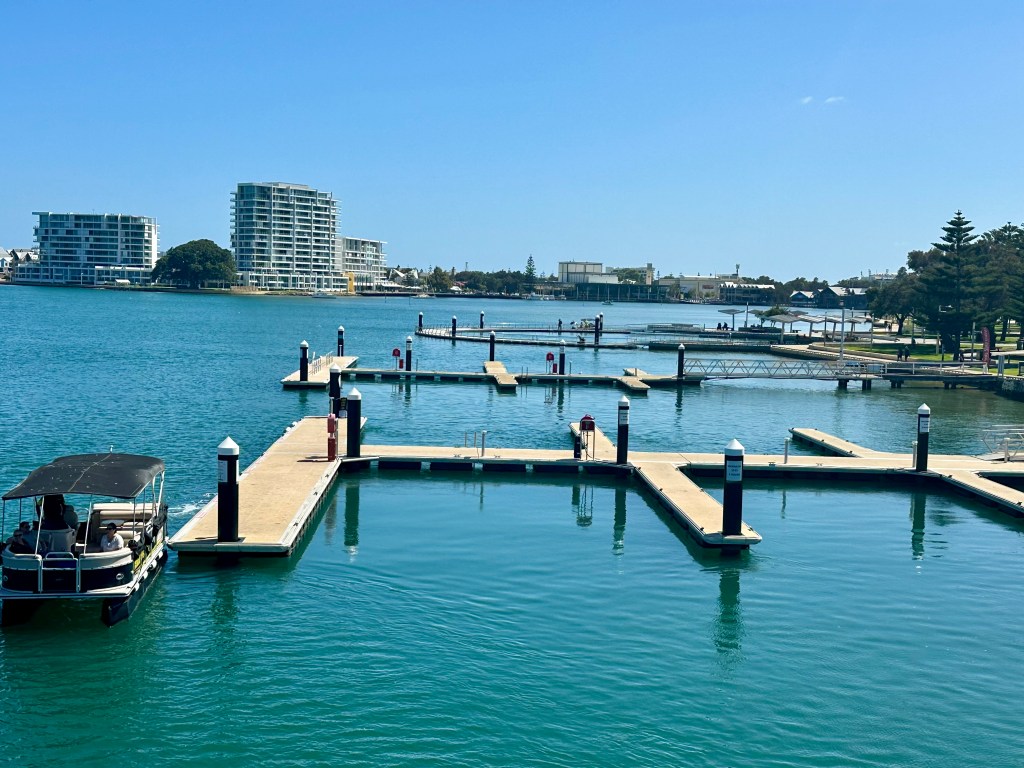
Our first stop was Mandurah, about 1 hour south of Perth. We stayed in a very functional hotel (Sebel). This hotel lacked charm, but it had lots of space and was brilliantly positioned. We could swing a cat in our room; with the Tribe in Perth, the poor cat would have had concussion!
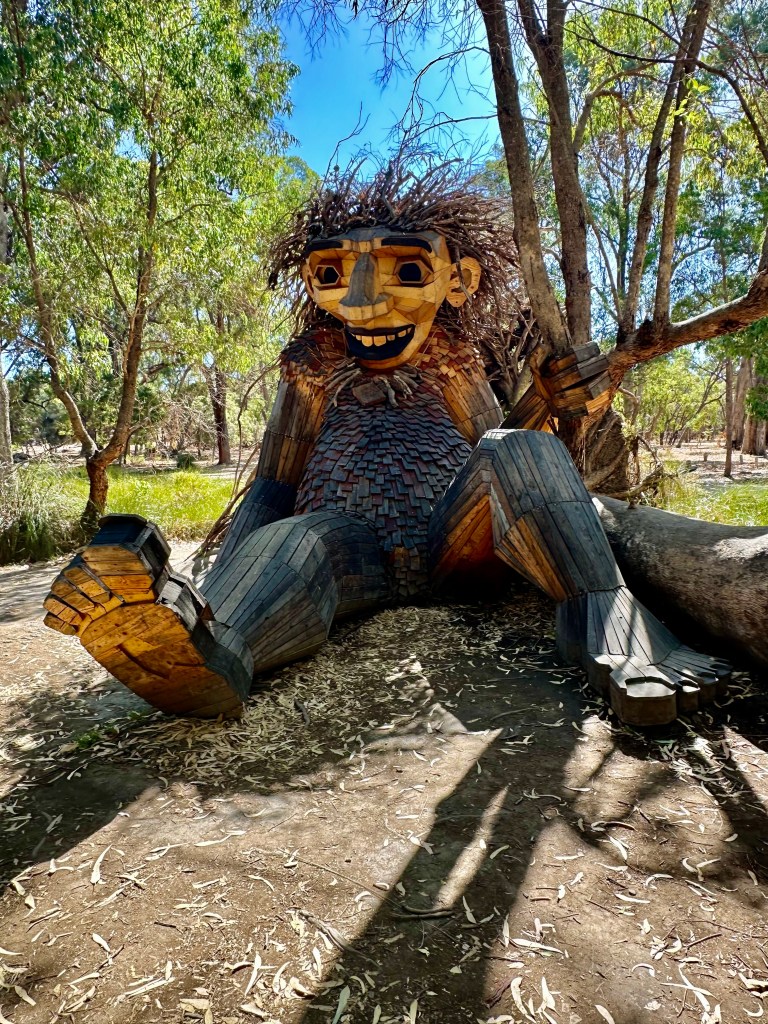
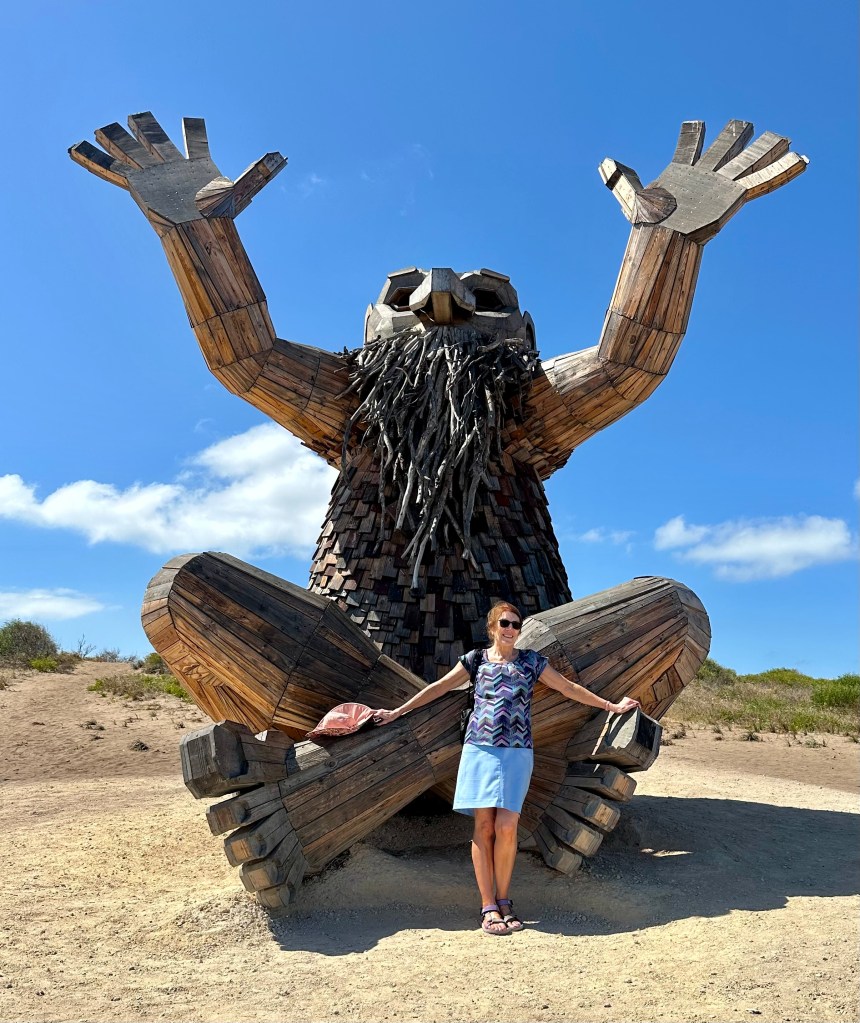
Mandurah prides itself on its laid-back nature and the guide we received at reception was entitled ‘Australia’s Top Tourism Town’. Seeing this in print, I was sceptical. However it is fair to say that Mandurah exceeded all our expectations. The area around the marina is spectacular. We even saw a pod of dolphins playing in the water, right next to the boardwalk near our hotel. The Tourist Information staff were invaluable and recommended we spend time looking for the Giants of Mandurah. These massive sculptures are very impressive. There are five in and around Mandurah and one in Perth. We also visited the War Memorial in Hall Park, which was extremely moving. We rounded off our second day by swimming in the Indian Ocean off Town Beach. Glorious.
Margaret River
The trip to Margaret River is around 2½ hours. We stopped on the way to visit friends. We also stopped to look at the Thrombolites, which, to be honest, were not the most interesting. The drive down was straightforward: well signposted, but a bit boring with the same outlook along straight roads. It was easy to exceed the speed limits, so cruise control was important to use.
We stayed at the Heritage Trail Lodge close to the town centre. Our lodge was spacious and even had a jet bath. Margaret River is a well-known wine-growing region in Australia. Tours invariably include visits to multiple wineries and lunch. They often also include visits to other sites such as coffee or chocolate sampling, working farms, and olive oil producers.
Albany
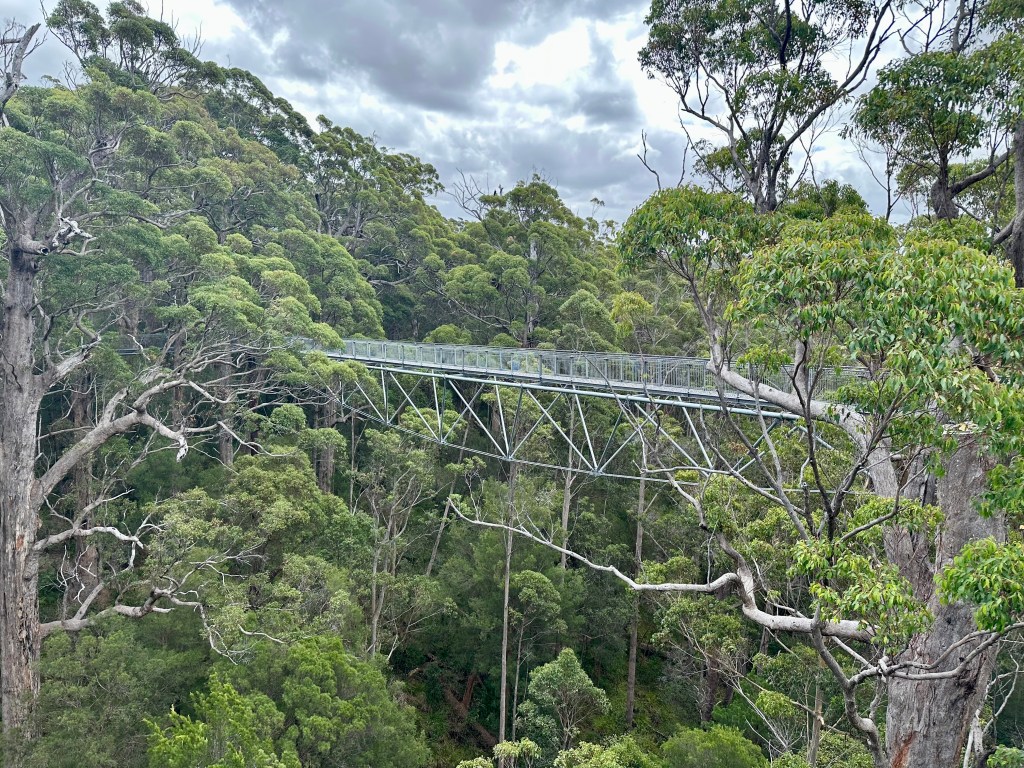
Our next night was spent in Albany. Again, an easy journey from Margaret River. If we had driven straight there it would have taken 4½ hours. We made two stops. The first was at a Heritage Park in Manjimup. The other stop was at the Valley of the Giants near Denmark. The latter was a treetop walk, about 40 metres above the forest floor. There was also a trail at ground level and guided tours were available.

We stayed at The Dog Rock Motel. The motel is named after a large rock opposite it. The rock sort of resembles a dog’s head if you look at it from one angle. It may also resemble a dog’s head if you have been out on the town the night before! Our room was large, decorated in a 1970s style, with old-style blankets and sheets instead of a duvet. Breakfast was the best we have had in Australia and the on-site restaurant was excellent. Don’t be put off by the austere look of the outside of the motel.
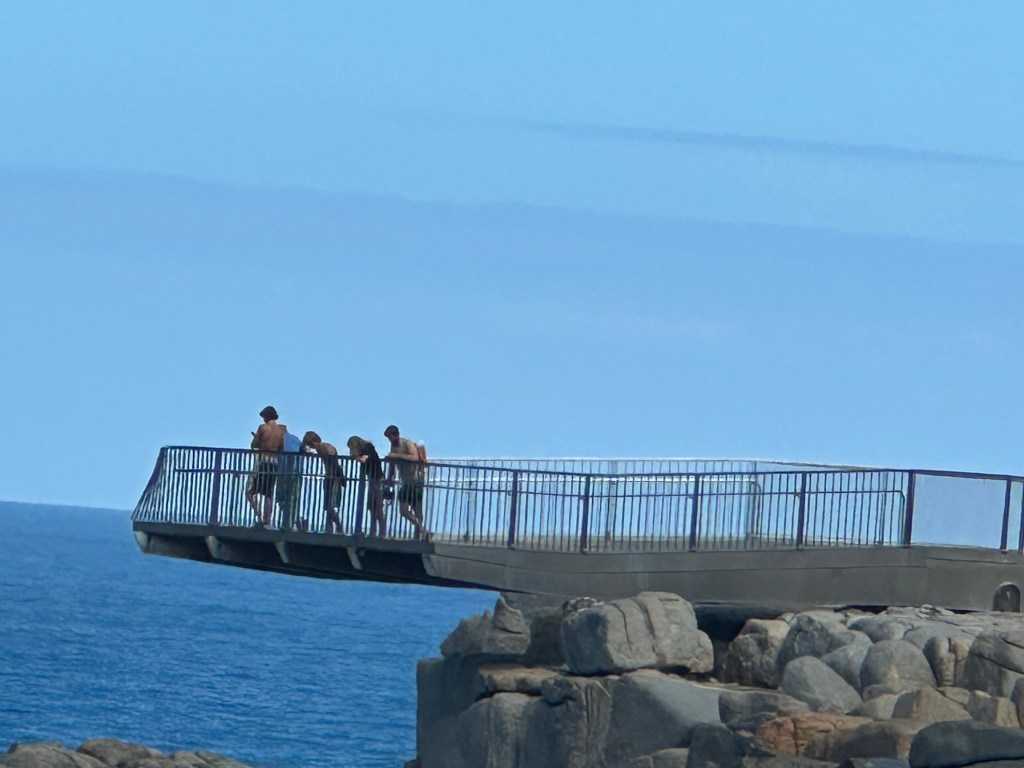
On our first morning in Albany, we went to the Torndirrup National Park. We visited ‘The Gap’, ‘The Bridge’, and the blowholes. Stunning scenery. Our next stop was the Historic Whaling Station. This was very well done and explored Australia’s last whaling station, operating until 1978. It showed how the Whaling station functioned. It also detailed the extent of its activities and the effect on the community when whaling was banned.
On our second day in Albany we visited the ANZAC centre. Very impressive and a must do when visiting Albany. After the ANZAC centre we went to Middleton Beach. WA is truly blessed with fantastic beaches. Middleton Beach is huge and faces the Southern Ocean rather than the Indian Ocean. It’s a bit colder than the beach at Mandurah. However, it’s much warmer than swimming in the Atlantic in Portugal.
Bunbury
It took us around 6 hours to get from Albany to Bunbury making two stops. The first was at the Heritage Park in Manjimip. This time we walked around the community facilities. Very impressive. We also stopped at Busselton, famous for its long pier. There is a train to take you to the end of the pier. We walked and it was a nice walk (1.8 km each way). At the end of the pier was an underwater observatory, one of only six natural aquariums in the world (it said this on a sign, so it must be true!). This was cleverly done and is well worth the entrance fee – don’t bother with the guided tour. 20 minutes is all you need.
We then drove to Bunbury. Our hotel, the Rose Hotel and Motel, was having significant renovations. We arrived at 5.30 pm and the reception was closed, with a sign saying ‘Go to bottle shop’. A key in an envelope was there. The major problem was where to park. At a motel you expect to be able to park your car. Not here. Between contractors, pub diners, and heaven forbid, actual paying guests, there was not a chance of a parking space. The young chap at the bottle shop said “Dunno” when we asked where to park. Anyway, the room was a reasonable size, the shower hot. But that was it. In place of shower gel (lots of conditioner though) there were a few cockroaches. If we had known about the renovations we would not have stayed there. The pics on Booking.com were somewhat misleading. We had planned to stay (and had paid for) two days. On the second day, Sue returned from her Dolphin Discovery Cruise. I spoke to the lady in the office after Sue’s return. To say she was unhelpful and couldn’t really care less was an understatement. We didn’t stay the second day and drove to Mandurah for the night. Our advice: don’t stay there!
The food at the pub next door was fine. If you like sports, there were loads of big TVs showing Aussie Rules football.
I am sure Bunbury has lots going for it. But it just takes one poor experience to leave a bad impression. We drove back to Mandurah and stayed for a night at the Atrium hotel near Dolphin Quay. Nice hotel and very convenient. The next morning we drove to Perth airport to drop off our hire car. Very easy drive and the staff at Dollar (part of Hertz) were terrific. Finally an Uber to our hotel in Perth rounded off our 10 day road trip.
Magnificent 7 // Perth to Albany
- Go Giant hunting in and around Mandurah
- Salute the ANZACS at Albany’s ANZAC centre
- Swim in the vicinity of wild dolphins in Bunbury
- Sample wines in the Margaret River wine region
- Learn about the whaling operation at the Historic Whaling Station in Albany
- Visit one of the many National Parks
- Detour off the main road and stop at a country town.
1. Go Giant hunting in and around Mandurah
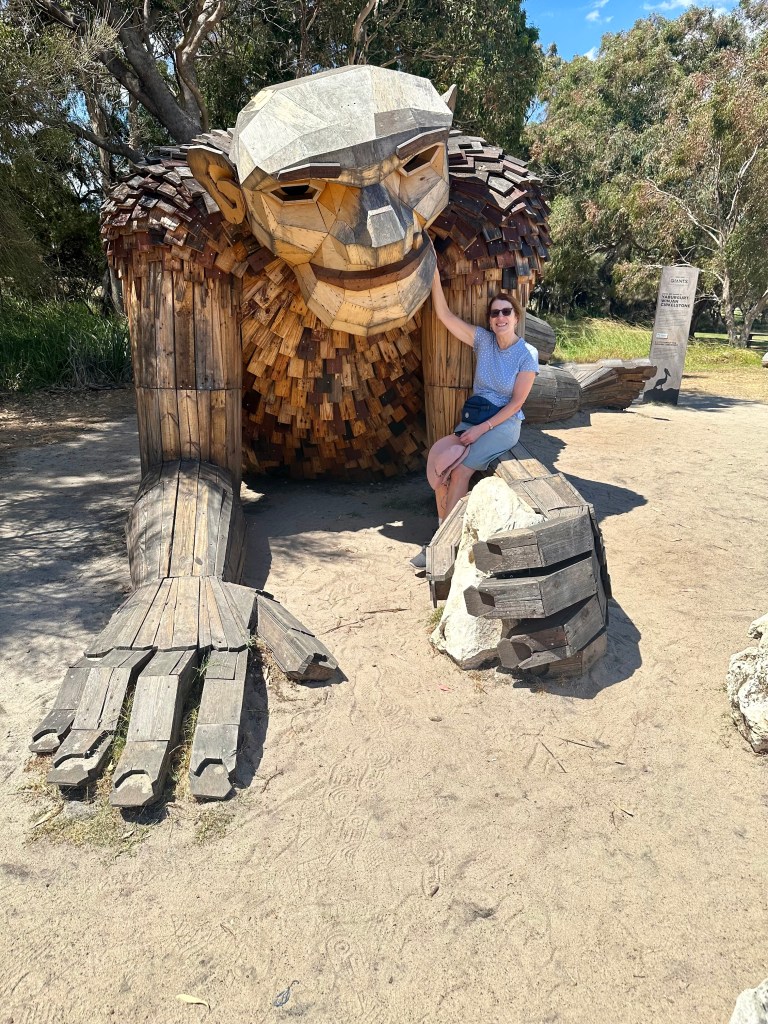
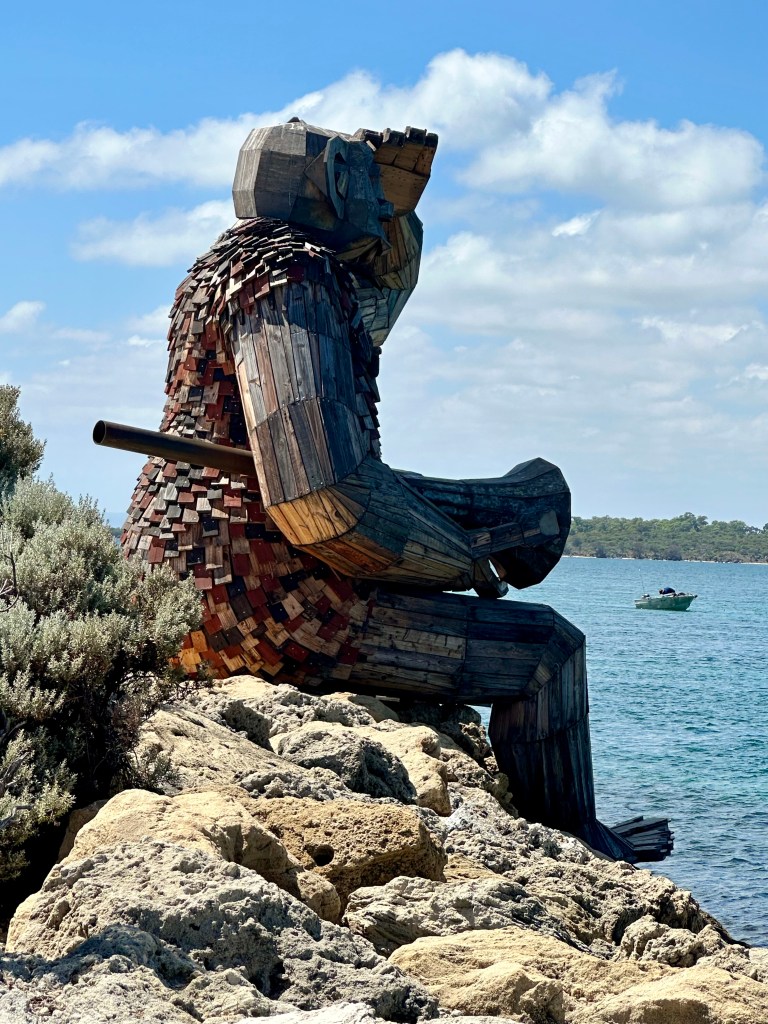
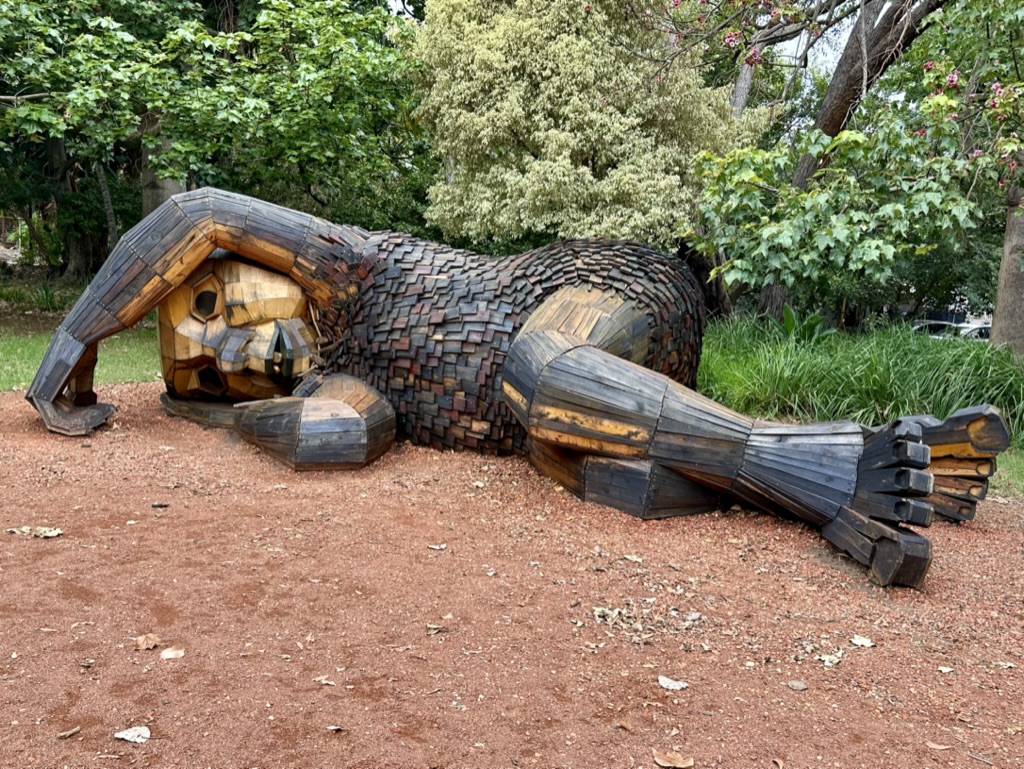
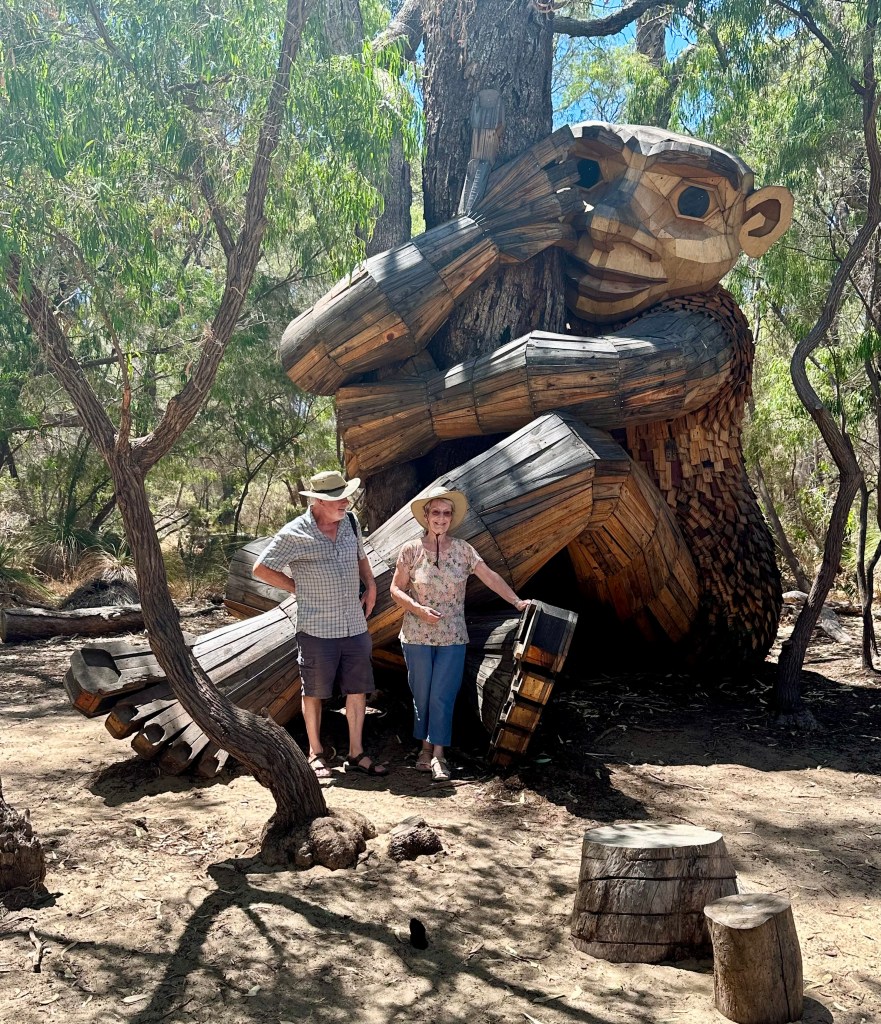
These giant sculptures were created by Thomas Dambo, considered to be the world’s leading recycle artist. These huge sculptures are made from recycled wood and are placed in natural settings. This encourages people to explore nature and find them. There is a game associated with these giants, where one location leads on to the location of another Giant. We found all the Giants and visited areas in and around Mandurah that we would not have explored. Highly recommended.
2. Salute the ANZACS at Albany’s ANZAC centre

This is fabulous. Having been brought up in Australia, the bravery of the ANZACS is part of the Australian psyche. We cannot recommend visiting the ANZAC centre highly enough. Each visitor is given a card with the name of a soldier. As you pass through the exhibits, you learn that person’s fate. Really well done and very moving. On the downside, we visited on a Monday and the only place to buy refreshments was closed. Not even a vending machine. If you are only visiting the centre, then it’s not such a problem. If you want to walk the trails around the Centre, take a cold drink. Fortunately, we did take our own water bottles. The other issue was the maps provided for the walking trails. They were sketchy at best, and when you are walking in areas you are unfamiliar with you want to know where you are and where you need to go, especially as there was no mobile phone signal
3. Swim in the vicinity of wild dolphins in Bunbury
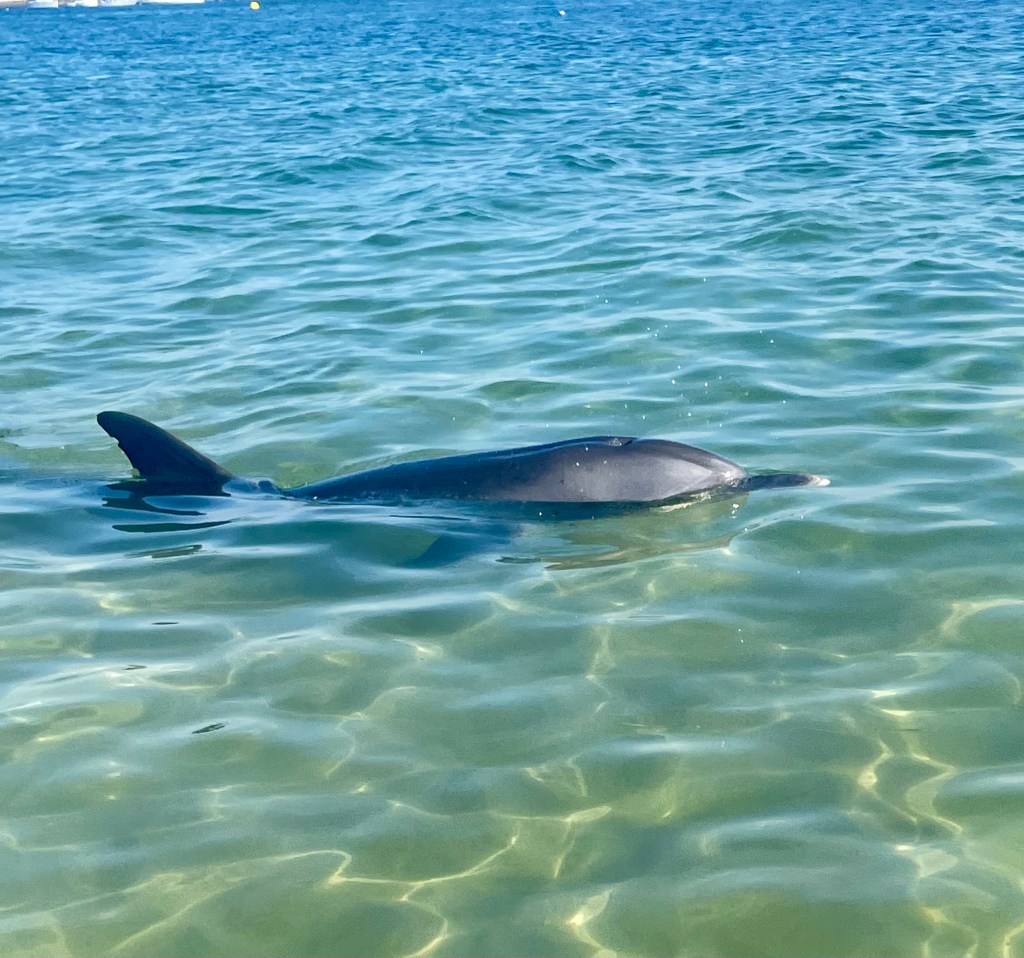
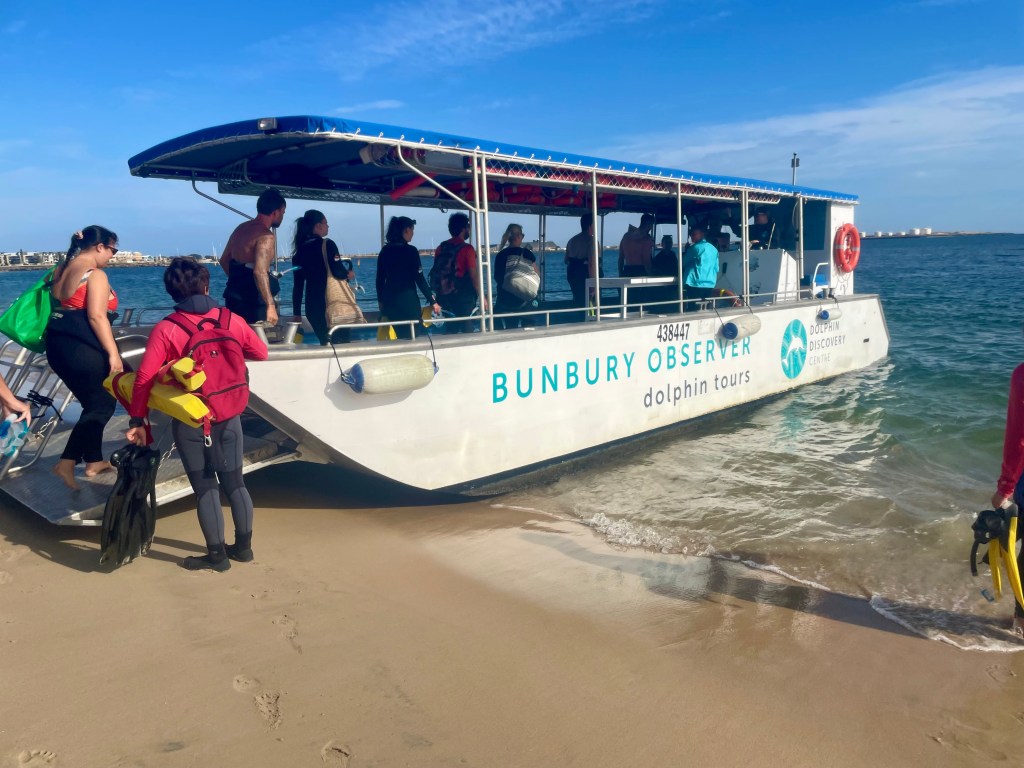
Bunbury is famous for its Discovery Cruises. Sue went with a small group to swim in the vicinity of dolphins. This was a real highlight. Sue was in a group of 14, including some children. One lucky girl was celebrating her 10th birthday on board. There were six guides plus the skipper. They were all female. Mostly, if not all, were volunteers. Safety was paramount for both the participants and the dolphins. Everyone was kitted out with wetsuits. Flotation aids were available, though you needed to be a reasonably confident swimmer. Very clear instructions about where to swim were given. It was made clear that the boat would stop near where dolphins were spotted. Then it was a matter of waiting for them to approach. On the fourth attempt, a pod of dolphins appeared and did just that. This included a mother and her calf who swam within a few metres of our group. A magical experience for everyone.
4. Sample wines in the Margaret River wine region
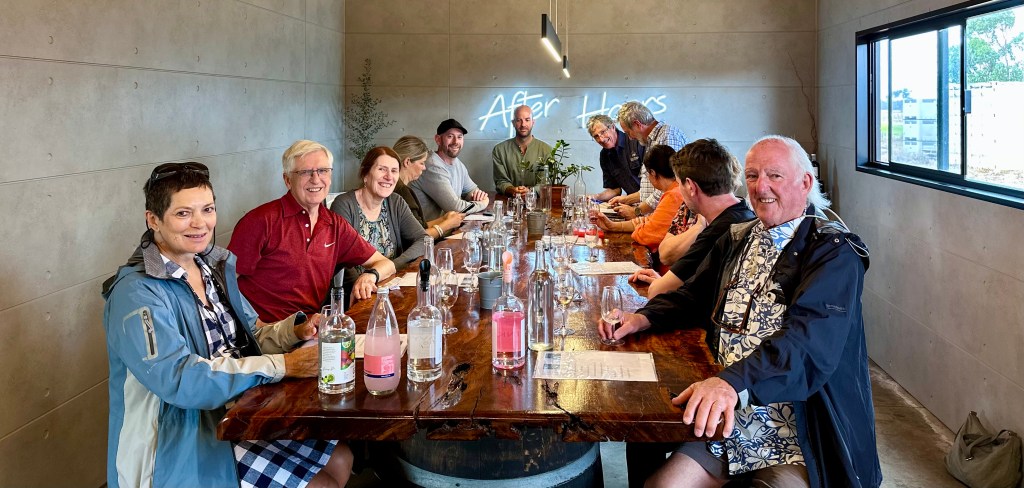
We booked a tour with All About Margaret River. This included a visit to a working farm. There was a tasting at a chocolate shop. We also visited three wineries. There was also a terrific lunch at an olive oil farm. This all-day trip lasted over eight hours and was excellent value for money. Our favourite winery was After Hours. This small winery was particularly friendly. In addition to some excellent wines, they also had a distillery, and we were able to sample some superb gins. The owner, Warwick, popped in to talk about the vines and the running of the winery.
5. Learn about the whaling operation at the Historic Whaling Station in Albany
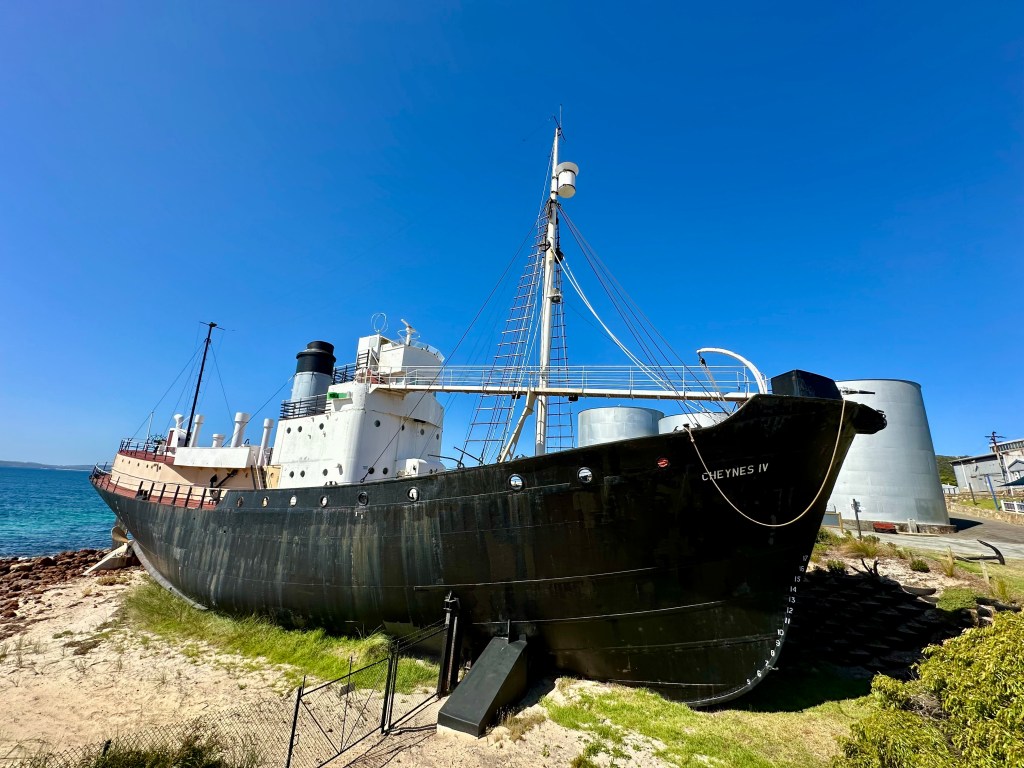
This is one of those tourist attractions you must visit. However, you feel sad when you realize the extent of the whaling operations. The devastation caused by the number and manner of these magnificent animals’ killings is distressing. There are information trails that show the scale of the whaling operations. We spent three hours here. There are many exhibits, ranging from whale skeletons to spotter aircrafts. You can also see the last whaling ship, the Chenies IV. Additionally, you can observe the machinery used to butcher the whales after they were transported to the station. There is an audio experience at 1130 and 1330 which we found useful. The local newspaper cuttings provided an interesting contrast. They predicted a significant negative impact on the local economy when the Whaling station was closed.

6. Visit one of the many National Parks
As mentioned above we visited the Torndirrup National Park. In the same area, there are many other areas of natural beauty. There are several parks nearby. These include Gull Rock National Park, Two Peoples Bay Heritage Park, and West Cape Howe National Park. These are just three near Albany. There are extensive descriptions online to review where to go. However, with inclement weather some of the parks close for safety reasons.
7. Detour off the main road and stop at a country town.
We really liked Manjimup, stopping on both the way there and back from Albany. There are many other places to stop such as Cowaramup or for something different try Gnomesville. Maybe look at a map and stop somewhere with an interesting name!
To note –
Water – Take water with you wherever you go. We were very pleased to have some on the walking trails in the Albany Heritage Park around the ANZAC centre.
Sea – The southwest of Australia has some magnificent beaches. Just be aware of power of the sea and rip tides. Generally never swim in an unpatrolled area, however not everywhere has a designated swimming area. Just be careful.
Weather – The sun is hot. On the coast you do not feel it so much owing to the sea breeze. But it is there. Be aware and apply sunscreen liberally
Mosquitoes – In some areas there are lots of them and they will bite you. Insect repellent helps, but they will always find a spot you didn’t reach with the spray.
Change of clothes – on long haul flights, I take a change of clothes. If at all possible, I shower after a long leg. At Hong Kong airport on the return leg it felt so good to shower, shave and change.
Fun fact: Many towns and villages in Western Australia end in -up. This suffix simply meant ‘place’ in the local Aboriginal language. So for example Manjimup meant ‘place of reeds’, Nanarup meant ‘place of many kangaroos’ and Kalgup meant ‘place of caves’. Bunbury was originally Kormbarnup, which meant ‘place of bad-smelling seaweed’. We can understand why it changed its name!
 Global Gary